
Credit Card Balance Transfers vs Personal Loans
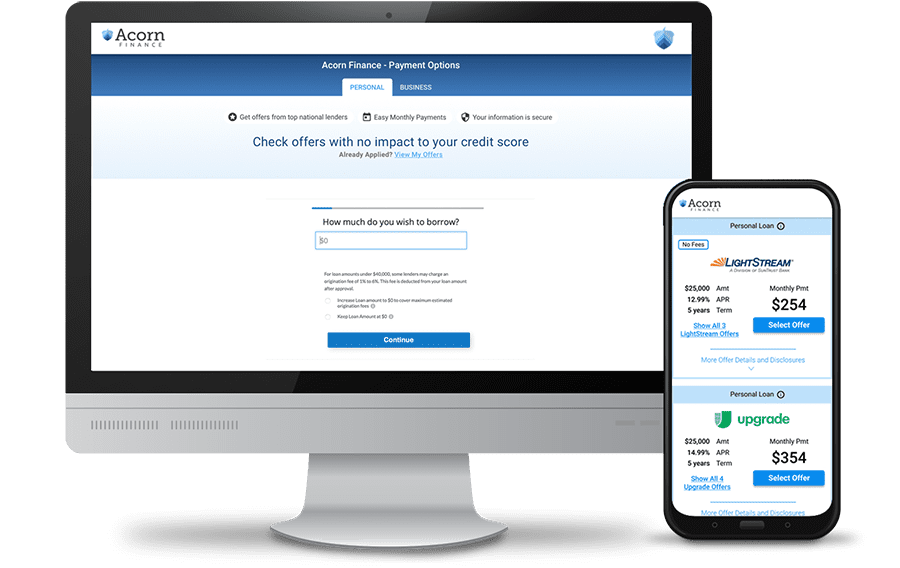

Check offers in seconds
Get pre-qualified for loan offers with an easy online form

Won't impact your credit
Checking offers will not impact your credit score

Competitive payment options
Funding up to $100,000 and APRs as low as 6.99%1

Receive funds quickly

Personal Loans or Balance Transfers on Credit Cards Explained
When you are looking to consolidate all or some of your current debts, you have two main options. You can take out a personal debt consolidation loan or you can try to apply for a new 0% APR credit card and simply transfer all your balances to the new card. Balance transfer credit cards typically come with a 0% introductory rate for a period of 12, 18, or 24-months depending on the credit card type and the company issuing the card. In addition to these two main options, you have a third option of doing both.
Quick. Simple. Secure.
How To Apply For Credit Card Balance Transfers vs Personal Loans

1 Pre-qualify
Fill out an easy online form to check for pre-qualified offers with no impact to your credit score

2 Select offer
Compare terms and payment options to select the offer that’s best for you

3 Finish application
Complete your application on your selected lender’s website

4 Receive funding
After your loan is approved, your funds should arrive within 1-2 business days2
COMPARE RATES FROM TOP LENDERS









Are you a contractor?
Generate more revenue with Acorn Finance.
Offer customers the ability to finance their dreams with zero dealer fees.
FREQUENTLY ASKED QUESTIONS
Learn More About Credit Card Balance Transfers vs Personal Loans
A personal debt consolidation loan may be a good option if you are looking to take all your different monthly debt payments and combine them into one easy monthly payment.
Read more - FAQ
Pros and cons of personal loans vs balance transfer cards
Doing both can help if you cannot qualify for a large enough loan to consolidate all of your debts or if you have too much debt to be covered by the credit limit set by the credit card company and you need a personal debt consolidation loan to cover the rest. If you can get a few thousand dollars credit limit on a balance transfer card for a period of 18 or 24-months, you can then pay back the largest chunk of your current debt balance with zero percent interest while putting the smaller portion of your debt on the personal loan that is going to come with some sort of interest rate that can range anywhere from 4% to 36% depending on your credit situation.
Whichever option you choose, you should be fully aware of the pros and cons of both personal debt consolidation loans and balance transfer credit cards when it comes to debt consolidation.
Personal debt consolidation loans
A personal debt consolidation loan may be a good option if you are looking to take all your different monthly debt payments and combine them into one easy monthly payment. You can lower your monthly payment amount by extending the term of the loan over a longer period of time. Doing so can greatly reduce the amount of money you are spending each month on debt payments, however, you may end up paying more interest over a longer period rather than paying less interest over a more short-term debt consolidation loan. In some cases, paying a bit more interest over time may be worth the expense if it means you can lower your monthly payment and build up a good amount of savings each month. Here are some of the pros and cons of choosing a personal loan to consolidate your current and past debts.
Pros:
You could reduce your interest rate: Most often personal loans may come with a lower interest rate than what credit card companies offer on their credit cards. If you lock in a lower interest rate for a personal loan and then use the loan to pay off all of your credit card debt, you could save hundreds or thousands of dollars in interest over the life of the loan. The same thing applies to other loans. Maybe you have been working hard to improve your credit score, and since you last applied for a loan, you have increased your credit score enough to qualify for a loan with a much lower interest rate than past loans. You can use the funds from the debt consolidation loan to also pay off other older loans with higher interest, and simply pay the new loan off with monthly payments at a much lower interest rate.
You could have a defined pay-off date: When you have several credit cards, you may notice that there is no defined date that the credit card will be paid in full. This is why they are called revolving lines of credit. If you simply make the minimum payments and you are charged interest each month, you metaphorically will be taking two steps forward and one step backward for a long period of time that could end up costing you thousands of dollars in interest charges over the course of a few years. With a personal debt consolidation loan, you can pay off all those revolving lines of credit and know that at the end of the loan term, whether it’s 24 or 36-months or some other period of time, your debt will be completely paid off if you do not miss any payments. If you do pay off your credit cards, be careful not to max them out again with new spending.
You could increase your credit score: By consolidating all of your debts into one personal loan, you can help to build your credit score by making consistent on-time payments and by bringing down the total amount of debt that you have.
Cons:
You could pay a higher interest rate: If you are seeking a debt consolidation loan because you have taken on too much debt, there is a chance that your credit score has dropped significantly. If this is the case, there is no guarantee that you will be able to qualify for a personal loan with a lower interest rate than your previous loans and credit cards.
You could pay more interest over time: If you consolidate all of your debt onto a single debt consolidation loan and you extend the repayment period out a good number of years, you may end up paying more in interest over time than if you would have just tried to pay off the debts you had each individually one-by-one.
There may be fees: Sometimes loans can come with origination fees and early pay-off penalties. When searching for a personal debt consolidation loan, you should consider that and be sure to factor in the added costs into the cost of your debt consolidation.
Balance transfer credit card
Balance transfer credit cards are cards that credit card companies offer to borrowers with decent credit to get them to become one of their customers. In some cases, your existing credit card company may have balance transfer offers, it’s worth checking. The cards usually contain promotional and introductory rate programs that may look something like 0% APR for 18-months. When a consumer opens one of these credit cards, they may have a unique opportunity to consolidate all their other credit card debt onto one card with a 0% APR. Whatever the promotional period is, 12, 18, or 24-months, the consumer then has that amount of time to pay off as much of the debt as possible without accumulating any interest. The only catch is that credit card companies typically charge a 2% or 3% balance transfer fee on the total amount being transferred onto the new card. However, it is a one-time fee, and when you compare it to credit card APRs that can be as high as 24.99%, 2% or 3% is not so bad. Here are some of the pros and cons of using a balance transfer credit card to consolidate debt.
Pros:
Consolidate monthly payments: If you have multiple credit cards with multiple due dates and various interest rates, it could be difficult to keep track of when payments are due and when credit cards will be paid off. By consolidating all your different credit cards onto one account, you can easily keep track of when one simple monthly payment is due. You can also give yourself to the end of the introductory period to pay off the entire credit card balancing giving you a predetermined pay-off date to strive for in order to become debt-free.
Save money on interest: By consolidating all of your high-interest credit cards onto a new 0% APR credit card, you have a unique opportunity to pay off all of your credit card debt while being charged zero interest.
Cons:
Balance transfer fees: Balance transfer credit cards charge a fee of anywhere from 2% to 5% of the total balance being transferred onto the card. For example, if you are moving over $5,000 onto a new 0% APR balance transfer card that charges a 3% balance transfer fee, then you will be charged $150 to complete the transfer.
Could make debt matters worse: One giant mistake that some consumers commit is that they open a brand new 0% APR credit card and use it to clear their current credit card debts from their current credit accounts. Once their old credit cards are paid off, their credit lines are wide open and they begin to charge on the cards again. This could lead to digging yourself into even deeper debt than when you first started the debt consolidation process.
Consolidating your debt successfully
Advantages to using a personal loan
Disadvantages to using a personal loan
When might a personal loan be a better choice for you than a balance transfer card?
Advantages to using a balance transfer card
Disadvantages to using a balance transfer card
When might a balance transfer be best?
Can you have a personal loan and a balance transfer at the same time?
ONE HOME, ENDLESS POSSIBILITIES
More home improvement financing options
Your home is a work in progress. Whether you wish to redo, repair or redecorate your home, we can make it all happen with the most effortless financing options.



Trending home improvement projects
Barn Financing Options



Personal loan information
Loans by amount
$1k Personal Loans
$2k Personal Loans
$3k Personal Loans
$4k Personal Loans
$5k Personal Loans
$6k Personal Loans
$8k Personal Loans
$10k Personal Loans
$20k Personal Loans
$25k Personal Loans
$30k Personal Loans
$35k Personal Loans
$40k Personal Loans
$50k Personal Loans
$60k Personal Loans
$75k Personal Loans
$80k Personal Loans
$100k Personal Loans
Learn about personal loans
How To Finance Home Renovations Easily
How To Get a Home Improvement Loan
How Do Home Improvement Loans Work?
How To Finance a Second Home
Contractor Costs To Build a Home
Average Home Improvement Loan Rates
Credit Card Consolidation Loans
Personal Loans for Debt Consolidation
What Are Secured Personal Loans?
Best Financing Options for Home Improvement
$100k Home Improvement Loans
Home Financing Tips for 2021
Personal Loan Refinancing Guide
Secured vs Unsecured Loans
Personal Loan to Pay Off Debt
Trending Articles
Home Improvement Loans In Louisiana
Home Improvement Loans In Oklahoma
Home Improvement Loans In Indiana
Home Improvement Loans In Utah
Home Improvement Loans In Wisconsin
Home Improvement Loans In California
Home Improvement Loans In Michigan
Home Improvement Loans In Florida
Home Improvement Loans In Maine
LMN Acorn Homeowner Financing
CertaPro Acorn Homeowner Financing
JobTread Acorn Homeowner Financing
[object Object]