
Revolving Credit Vs. Installment Credit
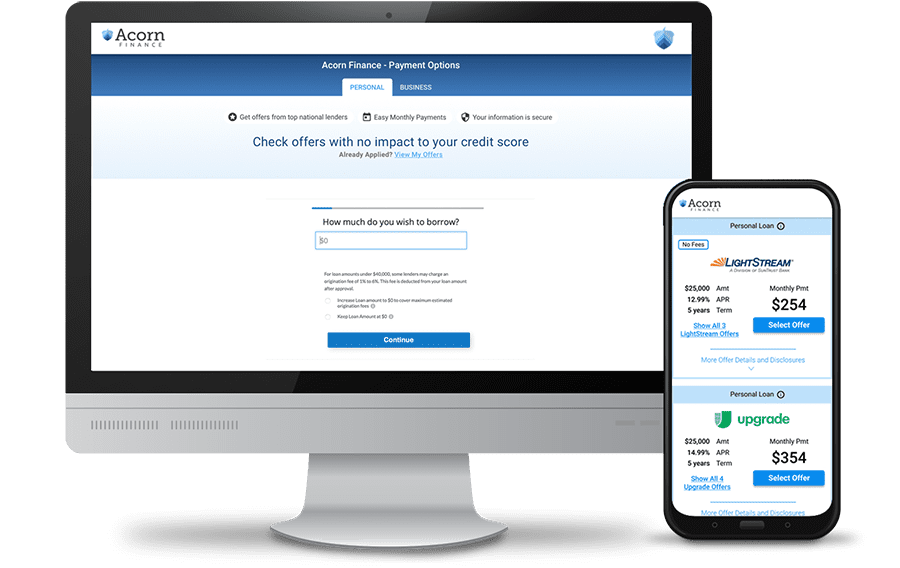
How It Works

Check offers in seconds
Get pre-qualified for loan offers with an easy online form

Won't impact your credit
Checking offers will not impact your credit score

Competitive payment options
Funding up to $100,000 and APRs as low as 6.99%1

Receive funds quickly

Revolving Credit Vs. Installment Credit: What’s The Difference?
When it comes to credit, there are two main types: revolving and installment. Both have their own benefits and drawbacks, so which one is right for you? Here’s a breakdown of each type of credit to help you decide.
Revolving credit is a line of credit that allows you to borrow up to a certain limit, and then repay the debt over time. This type of credit usually has a lower interest rate than installment credit, but it can also be more expensive if you don’t pay off your balance each month. Installment credit is a loan where you borrow a fixed amount of money and repay it over time, usually with monthly payments.
Quick. Simple. Secure.

1 Pre-qualify
Fill out an easy online form to check for pre-qualified offers with no impact to your credit score

2 Select offer
Compare terms and payment options to select the offer that’s best for you

3 Finish application
Complete your application on your selected lender’s website

4 Receive funding
After loan approval, your funds should arrive within 1-2 business days2
COMPARE RATES FROM TOP LENDERS







Are you a contractor?
Generate more revenue with Acorn Finance.
Offer customers the ability to finance their dreams with zero dealer fees.
FREQUENTLY ASKED QUESTIONS
Learn More About Revolving Credit Vs. Installment Credit
But which one is right for you? In this post, we’ll tell you everything you need to know.
Read more - FAQ
Is installment or revolving credit better?
An example of revolving credit is a credit card. Because you have constant access to this money as part of a credit card loan, being able to manage it well shows lenders that you are a responsible borrower. The opposite, of course, is also true.
Are credit cards revolving credit or installment?
Is installment credit good?
Installment loans can be especially beneficial in that they add on-time payment history to your credit report. They can also broaden your credit mix, which is part of your credit score that considers the types of accounts you own.
If you only have revolving credit, like a credit card, then taking out an installment loan can be a good way to diversify your different types of accounts.
Do revolving accounts hurt your credit?
One part of your credit score is the utilization ratio. The credit utilization ratio refers to how much of your available credit you are currently using. A ratio that’s over 30% can harm your credit score.
If you’re not sure what your utilization ratio is, just divide your total credit card balances by your overall credit limits (make sure you include all of your different lines of credit via credit cards, if you have more than one).
When should you use revolving credit?
While taking out an installment loan is another good way to show lenders that you’re worthy of a loan, revolving credit speaks more to your ability to responsibly manage debt on a day-to-day basis.
When is applying for credit preferable?
Instead, wait about six months between each new credit application. This will increase your chances of being approved and also prevent your credit score from taking a dip because of all the inquiries. When a lender checks your credit history to find out if you are worthy of new credit, this is known as a “hard inquiry” and can cause your score to temporarily drop.
What are the two basic types of credit?
Credit cards are the most common type of revolving credit, but HELOC (home equity line of credit) loans are another example.
Installment credit is also known as closed-end credit. You will borrow a single sum and be responsible for paying it back over a period of time. Once your loan is paid off, the account closes. Examples are mortgages and auto loans.
There is another type of credit you can apply for, too – and it’s one that’s often not grouped into revolving or installment categories because it’s a bit different. That is open credit – this is a type of credit in which your monthly payments aren’t always the same but the balances are due in full when the billing cycle ends.
They differ from revolving loans because you must pay the amount in full within a few days of receiving the bill. Unlike a credit card, which only requires the minimum payment (usually around $25), you’ll have to pay everything that is owed. An example is an electric bill.
Are all credit cards revolving credit?
How do I get more revolving credit?
Does an installment loan hurt your credit?
What is a good amount of revolving credit to have?
So, what’s the verdict? Is revolving credit or installment credit better for you? The answer is: it depends. There are pros and cons to both types of credit, so it’s important to weigh your options and decide which type of credit is best for your specific needs.
If you want more flexibility and don’t want to be tied down by a long-term contract, then revolving credit might be the right choice for you.
But if you prefer the stability of knowing exactly how much you’ll owe each month and want to avoid interest charges, installment credit may be a better fit. Whichever type of credit you choose, make sure to follow these tips to get the most out of your line of credit.
ONE HOME, ENDLESS POSSIBILITIES
More home improvement financing options
Your home is a work in progress. Whether you wish to redo, repair or redecorate your home, we can make it all happen with the most effortless financing options.



Trending home improvement projects
Barn Financing Options



Personal loan information
Loans by amount
$1k Personal Loans
$2k Personal Loans
$3k Personal Loans
$4k Personal Loans
$5k Personal Loans
$6k Personal Loans
$8k Personal Loans
$10k Personal Loans
$20k Personal Loans
$25k Personal Loans
$30k Personal Loans
$35k Personal Loans
$40k Personal Loans
$50k Personal Loans
$60k Personal Loans
$75k Personal Loans
$80k Personal Loans
$100k Personal Loans
Learn about personal loans
How To Finance Home Renovations Easily
How To Get a Home Improvement Loan
How Do Home Improvement Loans Work?
How To Finance a Second Home
Contractor Costs To Build a Home
Average Home Improvement Loan Rates
Credit Card Consolidation Loans
Personal Loans for Debt Consolidation
What Are Secured Personal Loans?
Best Financing Options for Home Improvement
$100k Home Improvement Loans
Home Financing Tips for 2021
Personal Loan Refinancing Guide
Secured vs Unsecured Loans
Personal Loan to Pay Off Debt
Trending Articles
Home Improvement Loans In Louisiana
Home Improvement Loans In Oklahoma
Home Improvement Loans In Indiana
Home Improvement Loans In Utah
Home Improvement Loans In Wisconsin
Home Improvement Loans In California
Home Improvement Loans In Michigan
Home Improvement Loans In Florida
Home Improvement Loans In Maine
LMN Acorn Homeowner Financing
CertaPro Acorn Homeowner Financing
JobTread Acorn Homeowner Financing
[object Object]